Best Spanish-Language Science Books for Students and Curious Minds
Discover top Spanish-language science book series that align with U.S. standards and engage learners across elementary grades. These structured sets cover life, earth, space, and physical science topics with vivid imagery, glossaries, and activities designed for classroom and home reading. This article highlights five worthwhile sets, each offering age-appropriate content, glossary terms, and practical activities to reinforce science concepts.
| Product | Grade Range | Focus Area |
|---|---|---|
| Let’s Explore Life Science Grades K-1 Spanish, 10-Book Set | K-1 | Life Science, Growth and Change |
| Life Science Grade 3 Spanish: 5-Book Set | Grade 3 | Life Science, STEM Topics |
| Let’s Explore Life Science Grades 2-3 Spanish Set | Grades 2-3 | Life Science, Ecosystems, Adaptation |
| Earth and Space Science Grade 5 Spanish: 5-Book Set | Grade 5 | Earth & Space Science, NGSS-aligned |
| Let’s Explore Physical Science Grades 4-5 Spanish, 10-Book Set | Grades 4-5 | Physical Science, Matter, Energy, Circuits |
These selections provide diverse topics and reading levels, enabling teachers and families to choose titles that best match their students’ interests and proficiency. Each set emphasizes visual support, vocabulary development, and activities that connect reading with hands-on inquiry.
Let’s Explore Life Science Grades K-1 Spanish

This ten-book set introduces kindergarten and first grade readers to essential life science topics. Students explore what living things need to grow, how animal parents raise their young, and the life cycle of a seed turning into a plant. The colorful pages emphasize growth, changes in living and nonliving things, baby animals, and the way species share similar traits. Clear captions, simple explanations, and engaging photos help early readers build foundational science vocabulary while connecting to everyday observations.
Life Science Grade 3 Spanish: 5-Book Set
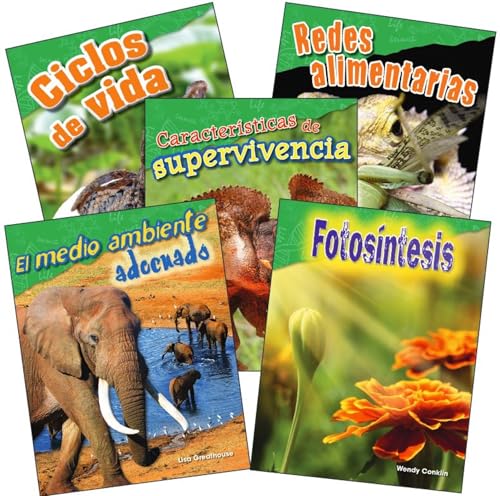
Designed for third graders, this five-book collection introduces core life science and STEM concepts with a focus on vocabulary development and comprehension. Each 32-page book includes a glossary, an index, helpful diagrams, and a practical science activity aligned to key standards. The Spanish-language format supports bilingual learners or students strengthening science literacy in both languages, fostering inquiry, observation, and critical thinking through scientifically structured text.
Let’s Explore Life Science Grades 2-3 Spanish Set

This ten-book set engages second and third grade readers with life science and STEM topics, including animal adaptation, food webs, and metamorphosis. Features such as intriguing images, a glossary, an index, and diagrams are designed to sustain curiosity and comprehension. Students can explore pollination, ecosystems, and habitats while building subject-specific vocabulary and reading stamina, supported by clear, accessible explanations in Spanish.
Earth and Space Science Grade 5 Spanish: 5-Book Set
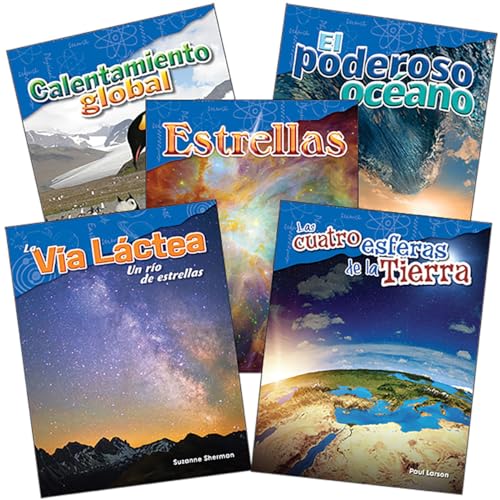
Fifth graders explore earth and space science topics with five Spanish-language books that include imagery, glossaries, indexes, and diagrams. Each title offers a practical activity aligned to Next Generation Science Standards, helping students apply what they learn. The set emphasizes topics such as weather systems, rocks and minerals, and space concepts, encouraging students to make observations, test hypotheses, and discuss scientific reasoning in Spanish.
Let’s Explore Physical Science Grades 4-5 Spanish
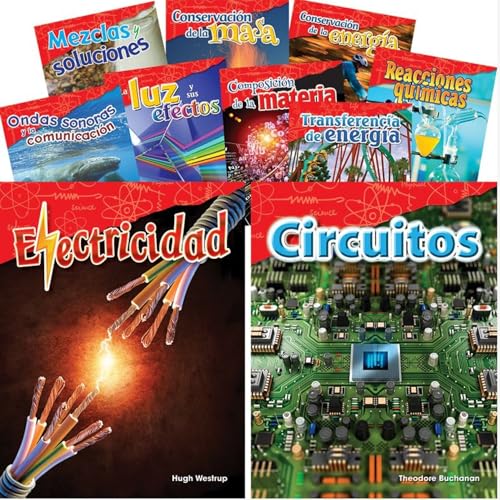
This ten-book set for fourth and fifth graders surveys physical science and STEM topics, including sound waves, circuits, matter, energy, and chemistry. The books feature challenging diagrams, sidebars, a glossary, and an index designed to maintain reader engagement. Readers can connect text to experiments and real-world phenomena, reinforcing how physical principles explain everyday experiences while expanding technical vocabulary in Spanish.
Buying Guide
When selecting Spanish-language science books for K-12 learners, consider these dimensions to balance accessibility, rigor, and engagement:
- Grade alignment and NGSS-compatibility: Choose sets that specify grade-level targets and standards alignment to ensure cohesive progression from year to year.
- Language support: Look for glossaries, indexes, and visual aids that support bilingual or Spanish-dominant readers, helping with conceptual comprehension and vocabulary acquisition.
- Visual and tactile engagement: High-quality images, diagrams, and captions aid memory and curiosity, especially for younger readers building scientific literacy.
- Text complexity and length: Favor titles with a mix of shorter paragraphs and clear explanations; a 32-page format per book is common for middle elementary levels and supports sustained reading sessions.
- Activities and practical applications: Books with activities, experiments, and discussion prompts enhance inquiry skills and help students connect theory to practice.
- Topic diversity: Ensure a balanced mix across life, earth, space, and physical science to provide a broad foundation and to accommodate varied interests.
- Brand reliability and standards focus: Reputable publishers with explicit content notes and teacher resources support classroom adoption and consistency in learning outcomes.
For classrooms and households serving Spanish-speaking learners, these five sets provide structured pathways through core science domains. They support vocabulary growth, reading fluency, and scientific reasoning, while offering opportunities for guided inquiry, collaborative activities, and independent study. Teachers can rotate selections to maintain engagement across terms, and parents can complement reading with science talks, nature walks, and simple experiments to reinforce learning.