Best Science Books for 6th Grade: Practical Guides and Engaging Workbooks
Discover top science books and workbooks ideal for sixth graders. This guide highlights accessible resources that reinforce core science concepts, vocabulary, and inquiry skills. Each pick offers lesson-aligned content, practical activities, and printable or digitized materials to support classroom or homeschool learning.
| Product | Brand | Highlights |
|---|---|---|
| The 100 Series Biology Workbook | Carson Dellosa Education | Biology topics, standards-aligned, vocabulary focus |
| Book GR 6 Daily Science | Evan-Moor Educational Publishers | Daily science activities, classroom-ready |
| Mark Twain Grades 5-8 General Science Workbook | Mark Twain Media | Practice across life, earth, space, and physical science |
| Spectrum 8th Grade Science Workbook | Spectrum | State standards, diverse science topics |
| The Everything Kids’ Science Experiments Book | Simon & Schuster | Hands-on experiments, exploration ideas |
The 100 Series Biology Workbook
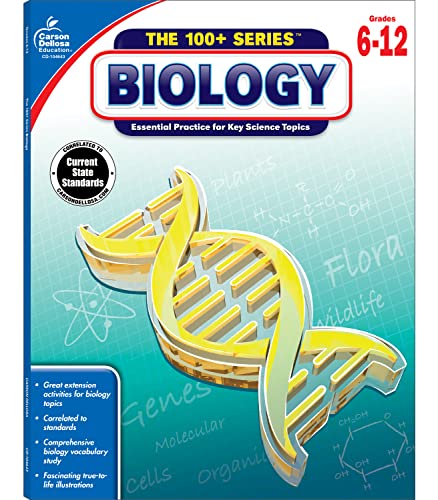
The 100 Series Biology Workbook provides a structured approach to core biology topics such as matter, atoms, cells, genetics, elements, and bonds. This volume supports science standards and offers comprehensive vocabulary practice to strengthen students’ fluency with key terms. It includes extension activities that challenge learners beyond basics, making it suitable for mixed-ability classrooms or homeschool settings where deeper understanding is desired.
Designed for grades around middle school, this workbook helps teachers and families introduce foundational biology concepts with clear explanations, diagrams, and practice problems. Its broad scope makes it a versatile tool for supplemental instruction or long-term science projects tied to curriculum goals.
Book GR 6 Daily Science

Book GR 6 Daily Science offers classroom-ready activities that cover essential topics in science. With a daily sequence of tasks, students build inquiry habits, perform quick experiments, and reinforce key science concepts across multiple disciplines. The resource is designed for sixth-grade routines, making it easy to integrate into daily lesson plans or as a supplement to core science curricula.
Ideal for teachers seeking consistent practice and for homeschool learners who want a steady cadence of science engagement. The book emphasizes practice, repetition, and gradual skill development, helping students gain confidence in scientific reasoning and observation.
Mark Twain Grades 5-8 General Science Workbook

This workbook covers a broad range of science topics—life, earth, space, and physical science—within grades 5-8. It aligns with NSE standards and provides extra practice to reinforce classroom learning. Students gain exposure to diverse scientific concepts, helping them build a solid foundation for advanced science coursework and standardized assessments.
With structured activities and review materials, the resource supports both independent study and guided instruction. It’s well suited for homeschool environments or supplementary practice within a middle-school science program.
Spectrum 8th Grade Science Workbook

The Spectrum 8th Grade Science Workbook covers natural, earth, life, and applied sciences through engaging activities and research prompts. The book aligns with current state standards and emphasizes science literacy, helping students read and interpret scientific information more effectively. It serves as a strong bridge between middle school fundamentals and high school science topics.
Readers can expect concise explanations, practical tasks, and opportunities to develop analytical thinking. This resource is suitable for both classroom use and independent study, providing a consistent framework for advancing science competencies.
The Everything Kids’ Science Experiments Book
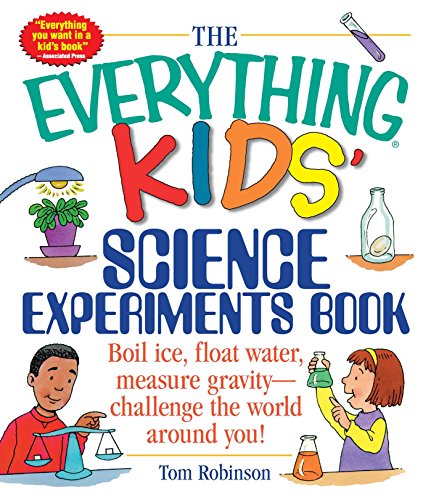
With hundreds of experiments and age-appropriate explanations, The Everything Kids’ Science Experiments Book invites hands-on exploration. From boiling ice to measuring gravity, the activities foster curiosity, observation, and problem-solving. The book encourages safe experimentation and clear documentation of results, making it suitable for home science projects, after-school clubs, or supplemental learning.
Although designed for a broad age range, it provides accessible entry points for sixth graders who enjoy learning by doing. The approachable style and variety of activities help sustain interest while reinforcing scientific principles.
Buying Guide: Key Considerations For 6th Grade Science Books
- Curriculum alignment: Look for materials that align with local or state science standards and emphasize core topics like biology, earth science, and physical science appropriate for grade 6.
- Learning style fit: Choose resources that balance vocabulary, reading, and hands-on activities. Some students learn best through visuals and diagrams, others through experiments and writing.
- Hands-on opportunities: Include books that promote experiments or practical investigations to develop inquiry skills and scientific reasoning.
- Skill progression: Consider whether the book scaffolds concepts from basic to more complex levels, with clear explanations, practice, and review.
- Assessment support: A good mix of practice problems, comprehension checks, and vocabulary work helps measure progress over time.
- Accessibility and flexibility: Favor resources that work in classrooms or homeschool settings and offer printable or digital options if needed.
- Safety and age-appropriateness: Ensure experiments and activities are safe for home or classroom use and appropriate for the student’s maturity level.
- Resource variety: Use a combination of subject-focused workbooks and activity books to cover theoretical knowledge and practical application.
- Cost and durability: Consider the volume, binding quality, and whether the content is reusable across multiple students or cohorts.