Best Primary Story Composition Books for Young Writers
The best primary story composition books help early writers develop handwriting, drawing, and storytelling in one convenient format. This guide highlights five strong options ideal for grades K–2, suitable for home, classroom, and homeschooling setups. Each pick targets beginners who want clear handwriting practice plus room to illustrate ideas. The buyer intent is to help you choose the right book for storytelling, drawing, and writing fluency.
Overview of top picks at a glance:
| Product | Why It Stands Out | Best For |
|---|---|---|
| Mead Primary Journal Creative Story Tablet | Primary ruled pages with blank top for illustrations; durable hardcover | Young writers who want quick drawing space and handwriting practice |
| C-Line Primary Ruled Notebook | Top unruled drawing area with bottom primary lines; bright layout | Students who benefit from separate drawing and writing zones |
| Oxford Primary Composition Notebooks (Pack of 4) | Animal covers, alphabet guidance, and roomy primary ruling | Pre-K to early K-2 learners needing visual letter formation help |
| Rosmonde 5 Pack Primary Composition Notebook | Drawing area on each page with strong paper | Classrooms or families needing multiple copies |
| ONAVIA Primary Composition Notebook 4 Pack | Unruled top for drawing with primary ruled lines below | Kids who illustrate first, then write simple sentences |
Mead Primary Journal Creative Story Tablet

Product overview: This 7.5″ x 9.75″ journal is designed for grades K-2 and includes 100 double-sided, primary ruled sheets. The pages feature solid and dotted lines to guide handwriting, with the top half left blank for illustrations. The cover offers a manuscript alphabet reference, supporting early spelling and letter formation.
Who it’s best for: Ideal for beginners who want a compact, durable journal that pairs drawing with early writing practice. Great for families or classrooms focusing on handwriting and basic storytelling in one book.
Why chosen: The dual-purpose layout supports drawing and writing on the same page, which helps young students connect images with words. The included alphabet reference on the cover serves as a quick visual aid during practice.
Caution: The primary ruling may be tight for some larger handwriting styles; ensure your child’s writing size fits the lines comfortably.
C-Line Primary Ruled Notebook

Product overview: The C-Line notebook uses primary ruling with a two-part page: a blank top area for drawings and a bottom section with red baseline and dotted lines to aid letter positioning. It’s designed to help beginners develop handwriting while enabling expressive storytelling through illustrations.
Who it’s best for: Students who benefit from clearly separated drawing space and structured writing guides. Suitable for both note-taking and story development time.
Why chosen: The dual-area format aligns with writing-first or drawing-first approaches and includes an inside cover that reinforces alphabet and storytelling concepts.
Caution: The layout relies on a clear distinction between drawing and writing zones; ensure your child uses both sections consistently for best results.
Better Office Products Primary Journal (3 Pack)
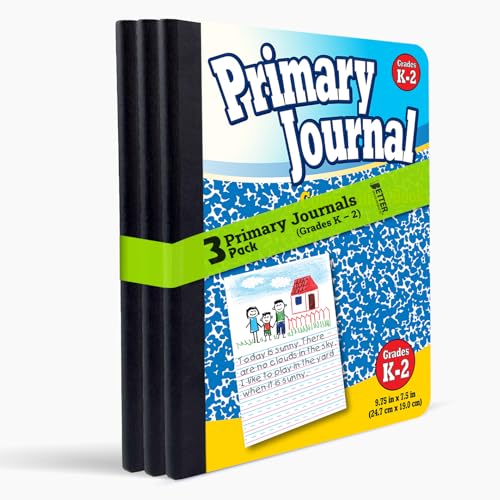
Product overview: This set includes three 100-sheet, one-subject journals with dotted line primary ruled paper and a durable blue marble hardcover. Each journal measures 9.75″ x 7.5″ and is sewn in the spine for strength. Alphabet references appear inside the covers for quick guidance.
Who it’s best for: Ideal for classrooms or families looking to stock multiple journals with a uniform layout. Good for daily writing practice and short stories alongside drawings.
Why chosen: The hardcovers and sewn spines provide durability for constant use, and the inside covers offer a quick reference for letters, supporting independent learning.
Caution: The pack emphasizes uniformity across three books; if you prefer variation, this may feel repetitive for some students.
Mead Primary Composition Book
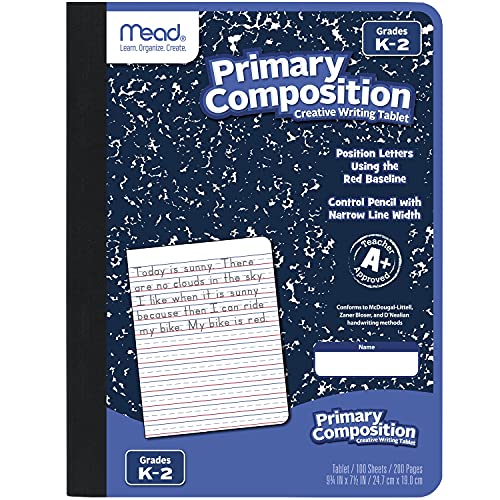
Product overview: This blue marble 7.5″ x 9.75″ composition book is geared toward grades K-2 with 100 double-sided, primary ruled sheets featuring solid and dotted lines for handwriting practice.
Who it’s best for: Students who benefit from a simple, traditional layout for writing practice and short stories, with a clear focus on handwriting development.
Why chosen: A trusted Mead option with a straightforward, study-friendly format suitable for daily writing tasks and creative journaling.
Caution: This basic format lacks extra illustration space on the same page; consider adding a separate drawing activity if your child writes and sketches together often.
Oxford Primary Composition Notebooks (Pack of 4)

Product overview: This four-pack includes 100 sheets per notebook (200 pages total) with primary ruling designed for Pre-K to K-2 learners. Each page has space for drawing, with alphabet charts and letter-size guidance on the cover and back.
Who it’s best for: Great for parents and teachers who want consistent, classroom-ready notebooks with built-in letter formation guidance and visual aids for early readers.
Why chosen: The combination of drawing space and roomy primary lines, plus alphabet references, supports a comprehensive early writing program.
Caution: Designs emphasize standard letter forms; if your child needs more differentiated writing prompts, pair with additional guided activities.
ONAVIA Primary Composition Notebook (4 Pack)

Product overview: This four-pack features primary ruled lines with an unruled top space for drawing. The 9.75″ x 7.5″ pages support both drawing and writing, making it suitable for kindergarten through second grade students.
Who it’s best for: Choose this if your child likes to start with pictures before writing full sentences, or if you want a simple, portable option for school and home use.
Why chosen: The top drawing space encourages creativity and narrative planning, while the bottom lines guide sentence structure and spacing.
Caution: The unruled top area may not be ideal for older students who require more writing space without dividing lines; evaluate your child’s pace and style before committing long-term.
Buying Guide: Key Considerations For Primary Story Books
- Layout: Do you prefer top drawing space with writing lines, or a mixed page with writing and drawing areas on the same page?
- Ruling Style: Primary ruled lines with dotted midlines help letter formation; solid vs dotted lines affect readability and pacing.
- Durability: Hardcover versus softcover; sewn bindings tend to last longer in classroom use.
- Size: Common sizes range from 7.5″ x 9.75″ to 9.75″ x 7.5″; choose a size that fits a child’s handwriting scale and backpack.
- Illustration Space: If drawing is essential, ensure there is adequate blank space on pages for kids to express ideas visually.
- Alphabet and Reference: Some notebooks include alphabet charts inside covers, which can support independent writing practice.
- Value Pack: Bulk sets save money for classrooms or families with multiple writers; verify page counts and durability.
Frequently Asked Questions
- What age is best for primary story composition notebooks?
– Typically suitable for ages 4–8, spanning Pre-K to 2nd grade, depending on handwriting development. - Should notebooks include illustration space?
– Yes, top or dedicated areas for drawing help young writers plan stories and stay engaged. - Is a hardcover more durable than a softcover for kids?
– Generally, yes; hardcovers and sewn bindings tend to withstand daily handling in schools and at home. - What is primary ruling?
– Primary ruling places a solid baseline with a dotted midline, aiding letter height and alignment for beginners. - Can I use these notebooks for both handwriting and drawing simultaneously?
– Many designs support both activities, but always check if the layout matches your child’s preferred workflow.