Best Piano Chords and Scales Book Guide for Musicians
Discover top reference books that cover scales, chords, arpeggios, and cadences for piano players at every level. This guide highlights five comprehensive titles from respected publishers, each offering structured exercises, clear explanations, and practical practice routines. Whether you’re building foundational technique or expanding your improvisational toolkit, these books provide reliable methods, clear notation, and useful progression patterns to support steady improvement.
| Product | Author / Brand | Link |
|---|---|---|
| The Complete Book Of Scales, Chords, Arpeggios & Cadences | Alfred Music | Amazon |
| Scales, Chords & Arpeggios | Kjos Music Company | Amazon |
| Piano Adventures: Scale and Chord Book 1 | Faber Piano Adventures | Amazon |
| Scale Book | Intermediate Piano Method | G. Schirmer, Inc. | Amazon |
Note: The following sections summarize five relevant titles with objectivity, focusing on features, structure, and practical usefulness for practice and study at home or in lessons.
The Complete Book Of Scales, Chords, Arpeggios & Cadences
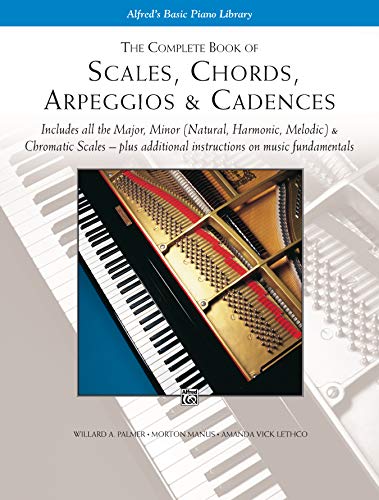
This comprehensive volume from Alfred Music assembles major, minor (natural, harmonic, melodic), and chromatic scales alongside chords, arpeggios, and cadences. The book is designed to support pianists seeking a thorough, all-in-one reference for scale patterns, harmony concepts, and cadence practice. Its layout typically provides progressive exercises that accommodate varying skill levels, with clear notation and practical examples. Ideal for players who want a single authoritative resource to structure practice sessions and to supplement method books or private lessons.
Features include a broad spectrum of scales (major, minor, chromatic), chord patterns, arpeggios, and cadences. The presence of multiple scales and instructional guidance helps users build finger independence, harmonic awareness, and a solid technical vocabulary that translates into repertoire fluency. Readers should expect step-by-step exercises that support technique, articulation, and consistent tempo control.
Scales, Chords & Arpeggios

From Kjos Music Company, this title emphasizes major and minor scales with relative scales clearly presented on facing pages for quick reference. The organization starts with scales (and harmonic scales), followed by cadence patterns and arpeggios, then melodic minor scales relative to major scales. The clear page layout aids comparison and hands-on practice, making it a practical choice for students who want an intuitive, visually guided approach to technique development. It is suitable for self-guided study or classroom use alongside supplemental method materials.
The book’s structured progression supports systematic improvement in technique, with alignment between scale patterns and related cadences. While it concentrates on foundational elements, readers gain a cohesive understanding of how scales connect to arpeggios and harmonic motion, which is beneficial for improvisation and sight-reading alike.
Piano Adventures: Scale and Chord Book 1
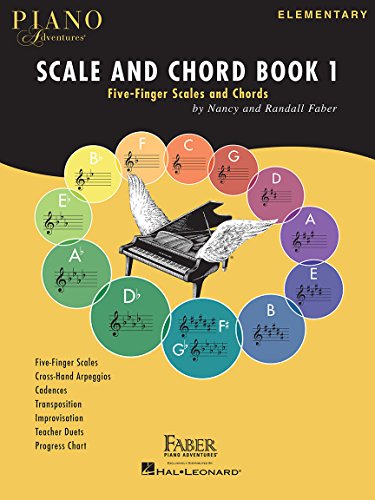
From Faber Piano Adventures, this beginner-focused workbook targets scale and chord technique specifically for early learners. The book is designed to complement the Piano Adventures method, offering five-finger scales, basic chords, and arpeggio patterns arranged to support a gradual skill-building pathway. Its structure favors consistent daily practice with clearly labeled sections that help students track progress, making it a practical entry point for beginners who want a focused, technique-centered resource.
Key strengths include accessible language, stepwise instruction, and a balance between scale work and simple chord patterns. It supports independent practice and can also serve as a companion to teacher-led instruction, particularly for younger students or those starting to explore chord shapes and position work on the keyboard.
Scale Book | Intermediate Piano Method

Published by G. Schirmer, Inc., this scale-focused title targets intermediate players seeking to expand technique through essential scales, chords, and arpeggios. The book’s method emphasizes technique development, with a compact number of pages that streamlines practice sessions. It is suitable for students transitioning from beginner materials or those preparing for more advanced repertoire that requires fluency across common keys and patterns.
Contents typically include a curated selection of scales, arpeggios, and chord patterns tailored for mid-level players, along with practical exercises to reinforce finger independence and precision. The concise format supports efficient practice, making it a dependable resource for lessons and independent study alike.
Buying Guide
- Skill level alignment: Choose a book that matches current technique and your goals, whether foundational work, improvisation, or repertoire preparation.
- Scope and depth: Assess whether you need a broad all-in-one reference or a focused practice book with clear, sequential exercises.
- Organization and layout: Look for books with separate sections for scales, chords, arpeggios, and cadences, plus diagrams or facing-page references for quick study.
- Notation and key coverage: Ensure adequate coverage of major, minor (natural, harmonic, melodic), and chromatic scales, and check how arpeggios and cadences are presented.
- Supplemental value: Some titles pair well with a specific method or piano method series; consider compatibility with your current curriculum or lessons.
- Practice practicality: Favor books with clear practice routines, tempo guidance, and practical examples that translate to performance and improvisation.
- Progression support: A good guide should offer a logical progression from simple patterns to more complex chords and cadences to track improvement over time.
- Durability and format: If you practice on the go, portable, spiral-bound, or durable paperback formats can be advantageous for frequent use.
These considerations help buyers compare titles for suitability, including how each book complements personal practice habits, teacher guidance, and the learner’s repertoire needs. The selected titles collectively cover foundational to intermediate technique, with attention to how scales, chords, and arpeggios interact in musical contexts. The best choice depends on the learner’s current level, preferred teaching style, and long-term goals in piano technique and theory.