Best Easy Piano Sheet Music for Beginners: Simple Picks and Playable Classics
Finding piano sheet music that’s genuinely easy for beginners can be a game changer. This guide highlights five beginner-friendly options that emphasize simple right-hand melodies, letter-name aids, and clear arrangements. Each pick targets a different type of buyer—absolute beginners, adults returning to the keyboard, and younger players seeking approachable classics. The list focuses on pieces that are easy to learn, visually straightforward, and playable without extensive theory. Use the summaries, pros/cons, and the buying guide to decide which book best fits your tempo, genre preference, and practice goals.
Quick Comparison Table
| Product | Best For | Why It Stands Out |
|---|---|---|
| Hit Songs Super Easy Songbook | Absolute beginners and adults | 60 popular songs with letter names and chord diagrams |
| Rolling Stone Easy Piano Sheet Music Classics Vol 1 | Fans of classic rock and pop | 39 selections from the 500 Greatest Songs of All Time |
| The Greatest Showman E-Z Play Today #99 | Musical theatre lovers | 9 easy songs in a beginner-friendly E-Z Play layout |
| Pop Standards – Super Easy Songbook | Youth and adults seeking classics | 60 tunes with simple right-hand melodies and chords |
| The Library of Easy Piano Classics | Classical learners | extensive classical repertoire in an approachable format |
Hit Songs Super Easy Songbook

This Hal Leonard collection is ideal for absolute beginners and adults returning to piano who want to play recognizable tunes quickly. The book includes 60 popular songs with letter names and chord diagrams, simplifying rhythm and harmony for easier learning. It’s best for players who want immediate satisfaction from well-known melodies while building confidence with sight-reading and basic accompaniment. The layout favors quick page-turns and clear visual cues, which helps focus practice on accuracy and timing. A potential limitation is that some pieces may still require coordination between hands as you progress beyond early lessons.
Who it’s best for: Beginners seeking familiar tunes and practical chord support without heavy theory, and adults who want to boost motivation with quick wins.
Why selected: It bridges basic reading with practical accompaniment, making it easier to progress to more complex arrangements.
Rolling Stone Easy Piano Sheet Music Classics Vol 1
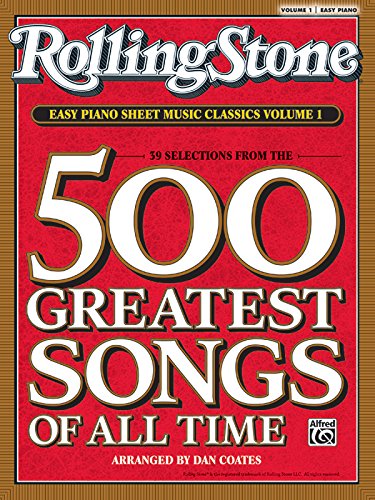
This collection assembles 39 selections from classic songs widely recognized across generations. Arranged for easy piano, these pieces are suited for players who enjoy rock, pop, and timeless standards. The selections emphasize memorable hooks and straightforward rhythms, making them a strong choice for improving memory cues and hand coordination with minimal complexity. A caveat is that some songs may still demand steady tempo and precise articulation as you advance beyond beginner levels.
Who it’s best for: Players who want a broad, familiar repertoire and gradual difficulty, especially fans of classic rock and pop standards.
Why selected: It provides a curated, approachable bridge to more ambitious arrangements while leveraging strong, recognizable melodies.
The Greatest Showman E-Z Play Today #99

This selection compiles nine songs from The Greatest Showman into an E-Z Play Today format, designed for beginners. The instrument focus is listed as organ in the product data, but many learners use piano or keyboards to practice. The arrangement emphasizes simplified chords and reduced note densities, which can speed up progress for theater-manual learners. A limitation is that the book’s keyboard arrangement may feel less conventional for pianists aiming to read standard notation later on.
Who it’s best for: Fans of musical theatre who want quick, friendly arrangements to build confidence with melodies from the show.
Why selected: It offers accessible novelty pieces in a well-known musical, supporting motivation and consistent practice.
Pop Standards – Super Easy Songbook

This Hal Leonard collection gathers 60 classic pop standards with a simple right-hand melody and basic chords. The 120-page book is designed for easy reading and quick learning, making it suitable for kids and adults who want a broad selection of approachable tunes. It’s best for learners who value a wide repertoire and straightforward accompaniment patterns. A potential drawback is that some pieces may require more left-hand independence as you advance, so paired practice with a metronome is recommended.
Who it’s best for: Players seeking a broad range of familiar tunes with legible notation and simple right-hand lines.
Why selected: The collection emphasizes fast repertoire expansion without overwhelming beginners with complex arrangements.
The Library of Easy Piano Classics

This large collection offers a classical repertoire tailored for beginners and adults exploring classical pieces. The book presents an extensive library of easy piano solos across an educational range, with a level labelled as intermediate and pages near 296. Although the breadth is a major strength for sustained learning, some titles may still present challenges for complete beginners. It’s best for students who want to steadily build classical technique and musicality without advanced technical hurdles initially.
Who it’s best for: Learners who want to explore classical repertoire in an accessible format and progress over time.
Why selected: It provides a comprehensive stepping-stone into classical pieces, supporting long-term skill development.
Buying Guide
What should you consider when choosing easy piano sheet music?
- Skill level alignment: Choose books clearly labeled for beginners or early-intermediate, with simplified notation or letter names to support reading.
- Song variety and genre: Match the collection to your musical tastes—pop, rock, theatre, or classical—to maintain motivation during practice.
- Notation and aids: Letters, chords, and diagrams help beginners play with confidence; ensure the book offers at least one of these aids.
- Arrangement format: E-Z Play and simplified arrangements reduce left-hand complexity, which is helpful for developing coordination.
- Progression potential: Look for books that allow you to advance gradually to more complex pieces without changing method abruptly.
- Practice support: Availability of a broad catalogue in one book minimizes switching between materials and aids consistency.
Frequently Asked Questions
- What is the main benefit of beginner-friendly piano books?
They provide recognizable tunes and simplified layouts that build confidence and routine without overwhelming learners. - Should I choose letter-name notation or standard notation?
Letter-name aids speed up initial learning, while standard notation develops long-term reading skills; many books combine both. - Can these books help with rhythm and tempo?
Yes, but beginners should practice with a metronome to establish steady timing as difficulty increases. - Is it better to start with classical pieces or pop tunes?
Start with what motivates you; a mix of genres can support broader musical development and sustained practice. - Are these books suitable for adults only?
They benefit players of all ages seeking approachable, confidence-building repertoire. - How do I gauge which book to start with?
Consider your favorite genres, your reading comfort level, and whether you prefer visual aids like letters or diagrams.
Note: The products listed above are presented as easy-entry options for readers seeking approachable piano music. Use the buying guide to weigh format, genre, and progression potential before making a choice.