Best Mozart Complete Piano Sonatas for Serious Pianists
For classical pianists seeking a comprehensive view of Mozart’s piano sonata repertoire, a carefully chosen collection can illuminate stylistic evolution, form, and expressive range. This guide highlights four highly regarded complete or near-complete editions, designed for study, rehearsal, and performance. Each entry includes edition details, editorial approach, and what to expect in terms of page layout and musical content. The selections span Schirmer, Dover, and Henle publications, offering options for different budgets and scholarly needs.
| Edition | Publisher | Format | Notes |
|---|---|---|---|
| Mozart – 19 Sonatas Complete | G. Schirmer, Inc. | Schirmer’s Library Vol. 1304 | Editor: Richard Epstein; 320 pages |
| Complete Sonatas and Fantasies for Solo Piano | Dover Publications | Notes & Arrangements | Contains 18 Sonatas and Four Fantasies |
| Complete Piano Sonatas | G. Schirmer, Inc. | Large-format edition | Pages: 692; Instrumentation: Piano |
| Mozart: Piano Sonatas – Volume I | G. Henle Verlag | Urtext edition | Editor: Ernst Herttrich; 158 pages |
Mozart – 19 Sonatas Complete

Edition: G. Schirmer, Inc. This volume compiles 19 Mozart piano sonatas with scholarly editing by Richard Epstein, presenting the Viennese master’s classical piano language in a practical library format. The 320-page volume supports intermediate to advanced players seeking reliable editorial decisions on articulation, phrasing, and cadence points. The content is aligned with traditional urtext practice while offering accessible page layout for practice sessions and recital preparation.
Complete Sonatas and Fantasies for Solo Piano

Dover Publications presents a broadly accessible collection that includes 18 Mozart sonatas and four fantasias, arranged for solo piano. The edition emphasizes practical usability and affordability for study and ensemble work. While not strictly urtext, the notes and arrangements are crafted for reliable performance practice, making it a strong option for students and teachers exploring Mozart’s varied structural experiments and lyrical passages across the sonata repertoire.
Complete Piano Sonatas
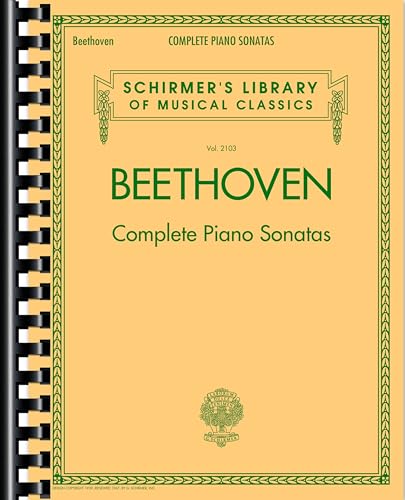
This G. Schirmer edition compiles Mozart’s complete piano sonatas in a substantial volume of 692 pages. The source material is organized for scholarly study and performance, with a focus on fidelity to the composer’s ideas across late 18th-century keyboard writing. Pianists will find a robust resource for in-depth practice, with clear layout and consistent editorial choices across the sonata cycle.
Mozart: Piano Sonatas – Volume I

G. Henle Verlag’s Volume I presents an urtext edition of Mozart’s piano sonatas, edited by Ernst Herttrich. This compact 158-page volume emphasizes scholarly accuracy, including critical notes and performance indications aligned with authentic period practices. It serves as an essential reference for serious pianists seeking precise notation and historically informed performance cues, particularly for the early sonatas and more intimate movements within the corpus.
Buying Guide
Key considerations when selecting a Mozart piano sonata edition include editorial approach, price, and intended use. Urtext editions (like Henle) prioritize fidelity to Mozart’s original manuscript and early sources, with scholarly commentary helping performers interpret ambiguous passages. Library editions from Schirmer tend to offer comprehensive collections with practical layouts and editorial notes suited for frequent study and recital use. Dover’s affordable option emphasizes accessibility and breadth, making it a solid choice for students building repertoire, though it may include simplified or re-arranged material.
- Editorial integrity: Decide if you want strictly urtext or editor-informed interpretations for learning and performance.
- Scope and organization: Some editions group sonatas into cycles; others present them individually with extensive notes.
- Practical layout: Consider font size, page turns, and binding, especially for long practice sessions or performances.
- Educational value: Look for companion commentary, historical context, and suggested practice strategies in the preface or notes.
- Audience and use case: Students may favor Dover for budget-friendly study, while professional pianists might prefer Henle or Schirmer for reliability and scholarly detail.
Across these options, pianists gain exposure to Mozart’s formal variety—from lyrical second movements to brisk, elegant finales—along with performance decisions about dynamics, articulation, and phrasing that define the period style. When choosing, consider your current repertoire level, available practice time, and whether you prefer a tightly edited urtext or a broader, annotation-rich edition for musical guidance during study.