Best Family Tree DNA Test Kits to Uncover Your Roots
Find the right family tree DNA test kit to map your ancestry, connect with relatives, and discover where your ancestors lived. This guide compares five top options, highlighting who each kit is best for, plus practical buying considerations. Ideal buyers include genealogy enthusiasts building family trees, long-distance relatives seeking matches, and newcomers exploring ethnicity estimates. Use the summary table below to compare at a glance.
| Product | Brand | Best For |
|---|---|---|
| FamilyTreeDNA Family Finder | FamilyTreeDNA | People who want deep chromosome-level matching and global relative connections |
| AncestryDNA | AncestryDNA | Users who want broad worldwide matching and strong family history integration |
| 23andMe Ancestry Service | 23andMe | Individuals seeking detailed regional breakdowns and trait insights |
| MyHeritage DNA Test Kit | MyHeritage DNA | Those seeking numerous ethnicity regions and easy relative matching |
| AncestryDNA + Traits | AncestryDNA | Users wanting trait reports alongside ancestry and relatives |
FamilyTreeDNA Family Finder
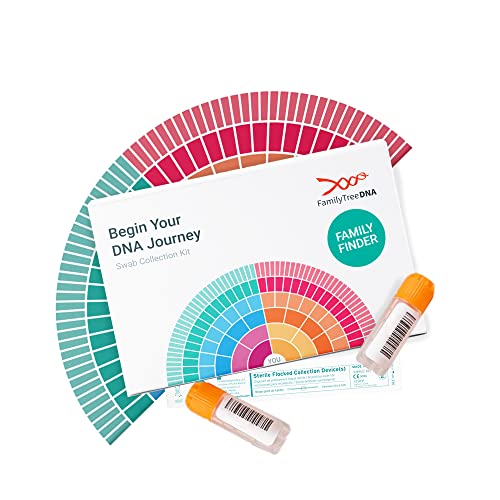
Best for: genealogists seeking robust chromosome-level matching and global relative connections. The kit supports Family Matching and a Chromosome Browser to compare shared DNA segments with relatives across the world, making it a strong choice for building a detailed family tree. The myOrigins Chromosome Painter colors genome segments to show population origins within your ancestry, while ancientOrigins explores ancient European DNA contributions. This kit emphasizes deep, technical comparisons that help map complex lineages.
Why selected: It provides tools focused on granular relative tracing and segment-level analysis, which can be especially useful for users who want precise genetic links beyond broad ethnicity categories. The integrated Chromosome Browser supports cross-relations research, a core strength for serious genealogical work.
Caution: The emphasis on chromosome-level data may be more than what casual users need; simplicity-focused researchers might prefer a kit with broader ancestry estimates and easier-to-use interfaces.
AncestryDNA

Best for: users who want a broad global connection network and strong family history integration. AncestryDNA emphasizes a wide geographic map of over 3,600 regions with easy steps to activate, submit, and view results online. It also offers a clear path to finding living relatives through DNA matching and a robust online family history experience.
Why selected: Its large database increases chances of finding matches and historic records, making it suitable for newcomers and seasoned researchers seeking a well-rounded combination of DNA data and genealogical records.
Caution: Some users may encounter broad regional estimates; individuals seeking highly specific regional detail may want to supplement with a second test that provides finer-grained regional data.
23andMe Ancestry Service
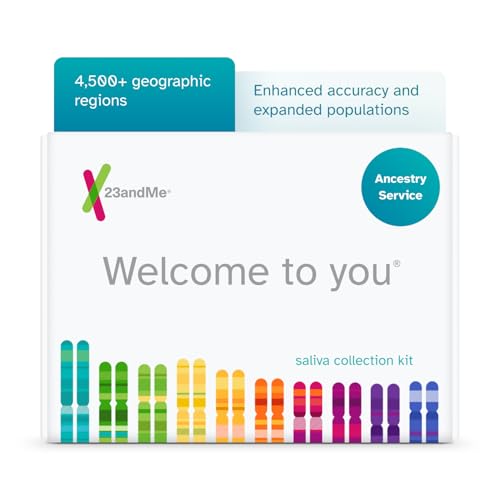
Best for: individuals wanting a detailed geographic breakdown and insights into ancestral migrations, plus optional DNA Relative Finder. 23andMe provides ancestry estimates across 4,500+ regions and includes Neanderthal ancestry information and family connection features, plus a modern trait section.
Why selected: Its comprehensive regional coverage and family connection tools help users trace finite migration patterns and understand personal heritage in depth, making it strong for heritage storytelling within a family tree.
Caution: The data focus can be dense; casual users may prefer simpler interfaces or a kit that emphasizes more immediate genealogy features rather than extensive scientific detail.
MyHeritage DNA Test Kit

Best for: users who want a large ethnicity breakdown and straightforward relative matching within a broad international network. MyHeritage DNA highlights 2,114 geographic regions and emphasizes connections to relatives, offering a convenient cheek swab test that is simple to administer.
Why selected: It blends a substantial regional map with a user-friendly experience, making it accessible for families building a tree across generations and geographies.
Caution: While expansive, some regions may appear broad; pairing with another test that provides complementary region-specific insights can enhance the overall picture.
AncestryDNA + Traits

Best for: users who want both ancestry data and trait insights. This kit combines standard ethnicity estimates with a trait report set, offering a broader view of how genes may influence physical or sensory traits along with family connections.
Why selected: It adds an extra layer of personalization by exploring 75+ genetic traits, which can enrich family histories and help explain inherited characteristics within a lineage.
Caution: Trait results are probabilistic and informational; avoid overinterpreting correlations as definitive predictive information for health or behavior.
Buying Guide
What should you consider when choosing a family tree DNA test kit?
- Scope of ancestry data: If you want the widest regional coverage, prioritize kits with thousands of regions and migration data.
- Relatives matching: Look for products that emphasize living relative connections and robust matching algorithms.
- Genealogy integration: Some services pair DNA results with expansive family history records—consider this for building a tree.
- Data privacy and control: Ensure the provider offers clear data-sharing controls and opt-in options for relative matching.
- Ease of use: Consider your comfort level with the user interface and how straightforward the sample submission and result interpretation are.
- Cost and value: Compare what you get in each kit, including number of regions, tools, and supplementary features like chromosome-level data or trait reports.
FAQ
- What is the main difference between these DNA test kits? Each kit varies in regional coverage, relative matching features, and whether it includes genealogy records or trait reports.
- How long does it take to get results? Most kits provide results within several weeks, depending on the lab and backlog.
- Can these tests help me find biological relatives? Yes, many offer DNA Relative Finder tools to connect with matches who share DNA.
- Is my data secure? Reputable providers offer privacy controls; read the terms to understand data sharing and deletion options.
- Should I use more than one kit? Using multiple kits can improve coverage and match opportunities, especially for distant relatives.
- Do trait reports indicate health risks? Trait reports describe inherited traits and how genes may influence certain characteristics; they do not substitute for medical advice.