Best Day to Day Journal Ideas for Everyday Mindfulness and Growth
Finding the right day-by-day journal can anchor your routines, boost consistency, and support mental well-being. This guide highlights five practical options for daily reflection, gratitude, habit tracking, and goal setting. Each pick is suited for different journaling styles—whether you want guided prompts, a simple undated layout, or a compact format for on-the-go use. The included table helps compare core features at a glance, helping you choose the best fit for your routine and goals.
The table below summarizes five well-suited day-to-day journals. Consider how you plan to use them: long-term habit formation, mood tracking, or guided self-discovery. For each option, we note the best use case, format highlights, and any relevant limitations.
| Product | Main Benefit | Format Highlights | Best For |
|---|---|---|---|
| And Per Se Wellness Journal | All-in-one wellness tracking | 91-day undated pages, lay-flat hardcover, 100gsm paper | Individuals seeking a single place for sleep, meals, water, mood, gratitude, and goals |
| INSIDE THEN OUT Better Every Day Journal | 365 guided prompts for self-love and growth | Pre-dated prompts, themes across self-awareness and mindfulness | New journaling habit builders who want structured prompts |
| 5 MINUTES A DAY Self-Care Journal | Short daily practice with quotes and reflection | 91 days, linen hardcover, 3 ribbons, pocket | People needing quick, meaningful daily routines |
| Intelligent Change The Five Minute Journal | Science-backed daily gratitude routine | Undated, beginner-friendly prompts | Beginners seeking a simple, repeatable habit |
| The Gratitude Journal for More Happiness (GOSSIP FOX) | Gratitude-driven happiness and reflection | Undated, six-month layout with morning/evening sections | Those focused on positivity and daily affirmation |
And Per Se Wellness Journal, Self Care & Daily Journal
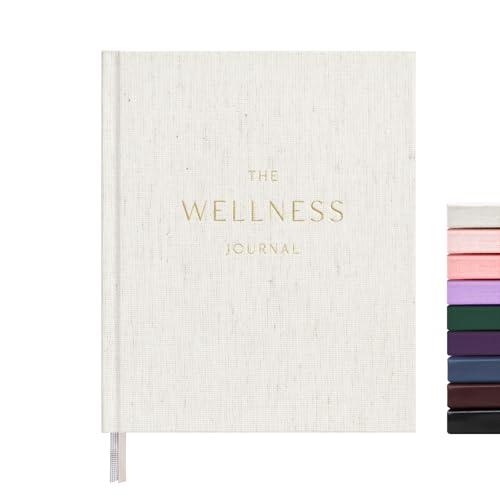
This undated 91-day daily wellness journey offers a compact, guided structure. It combines gratitude, self-reflection, habit tracking, and goal setting in one layout. Best for individuals who want a straightforward, sustainable habit cycle without complex phases. The lay-flat hardcover with premium 100gsm paper reduces bleed-through and improves writing comfort. A potential limitation is the 91-day window, which may require planning to extend beyond the period if you prefer longer cycles.
Who this is best for: Busy professionals or students who want a single, elegant self-care journal that doubles as a simple health tracker. It works well as a guided daily practice or a starter wellness journal for building consistency.
Why selected: Its all-in-one design reduces the need for multiple notebooks, making it easier to maintain a daily routine without app fragmentation. The 180-degree lay-flat binding enhances usability on any surface, supporting quick entries during commutes or breaks.
One caution: The undated pages mean you’ll need to create your own date structure each cycle if you track multiple years in parallel.
INSIDE THEN OUT Better Every Day Journal

This guided daily journal presents 365 prompts designed to foster self-love, reflection, and growth. The pre-dated pages allow starting on any day while cultivating a consistent practice. It emphasizes self-awareness, relationships, self-care, happiness, and personal growth. The strength of this journal lies in its structured prompts, which reduce hesitation for new journalers. A potential limitation is that the cadence of prompts may feel prescriptive for readers who prefer open-ended journaling.
Who this is best for: Anyone beginning a journaling habit who benefits from a clear, prompt-driven path toward mindfulness and personal growth.
Why selected: The diverse theme coverage helps users explore multiple facets of well-being, from gratitude to goal setting, in a cohesive flow. It suits people who appreciate guided introspection without overwhelming complexity.
One caution: The daily prompts may feel repetitive if you prefer more variety or more blank space for free writing.
CAGIE Lined Journal Notebook for Women Men

The CAGIE notebook offers 320 pages with thick 100gsm paper in an A5 hardcover, leather-like feel. It’s designed for writing durability with a pocket and gold-trimmed fabric accents. This option is best for long-form journaling or diary use, where thickness and smooth writing matter. The waterproof hardcover adds protection for travel, but thicker paper means you’ll want to avoid heavy bleed-prone inks if you’re using very dark inks. A pocket helps store notes or receipts for quick reference.
Who this is best for: Writers who want a sturdy, larger writing surface and a durable diary for everyday notes or reflections.
Why selected: The high-page count provides ample journaling space, and the hardcover design supports long-term use without wear. The pocket adds practical value for on-the-go organizers.
One caution: The notebook’s thicker format may be less convenient for pocket carry or daily carry if you prefer ultra-compact options.
5 MINUTES A DAY Self-Care Journal

This 91-day guided journal emphasizes a compact, manageable daily practice. It features quotes and space for reflection, manifestation, and self-assessment. The linen hardcover with gold foil lettering conveys a premium feel, complemented by 100gsm FSC-certified thick paper. With three ribbon bookmarks, a pen loop, and an elastic closure, it’s designed for reliable daily use. A potential limitation is the mid-range page count, which may require more frequent turnover than longer-term journals for some users.
Who this is best for: Individuals seeking a brief, repeatable daily routine that stays aesthetically pleasing and easy to maintain.
Why selected: The compact 8.3×5.8 inch size makes it highly portable, ideal for pockets or bags, while the guided structure supports consistent daily practice.
One caution: The fixed 91-day cycle means you’ll need to transition to a new journal after three months to continue the habit seamlessly.
Intelligent Change The Five Minute Journal

The Five Minute Journal offers a concise, science-backed approach to daily gratitude and mindfulness. It is undated, beginner-friendly, and uses prompts designed to reduce stress and promote focus. The simple format helps users build a sustainable habit with just minutes per day. While the prompts are effective for many, some readers may want more extensive sections for journaling beyond the core gratitude and affirmation prompts.
Who this is best for: Anyone seeking a straightforward, evidence-based daily practice to reduce rumination and increase presence.
Why selected: It provides a proven framework for turning gratitude into a lasting habit, using quick, repeatable prompts that fit busy schedules.
One caution: The minimal structure means readers who crave long-form writing may need an additional notebook for extended thoughts.
The Gratitude Journal for More Happiness (GOSSIP FOX)

This undated gratitude journal aims to boost happiness and optimism through a six-month layout with morning and evening prompts. It emphasizes daily reflection, gratitude, and positive affirmations to help users shift their mindset toward the good in each day. A potential limitation is the six-month window, which may require a transition plan if you prefer longer timelines.
Who this is best for: Readers who want a structured yet flexible approach to gratitude and daily positivity.
Why selected: The split morning/evening structure supports a balanced daily routine and helps reinforce positive thinking across the day.
Buying Guide
What should you consider when choosing a day-to-day journal?
- Daily structure: Do you want guided prompts, or a blank page with space for free writing?
- Undated vs dated: Undated layouts offer flexibility; dated formats help you track consistency.
- Size and portability: Will you carry it daily, or keep it at home or work?
- Paper and durability: Thicker paper reduces bleed-through; a lay-flat binding improves writing comfort.
- Habit and mood tracking: Do you need sections for sleep, meals, water, and mood, or just gratitude?
How to use a day-to-day journal effectively
- Set a consistent time: Morning entries can frame the day; evening entries can consolidate reflections.
- Keep it accessible: A portable option reduces friction to journaling when busy.
- Pair with a simple routine: Use a short template and a pen you enjoy writing with to improve consistency.
Which features matter most for different goals
- Self-care and mental health focus: Look for guided prompts and mood trackers to support well-being.
- Gratitude and positivity: Choose journals with daily affirmation prompts and morning/evening routines.
- Habit and goal setting: Seek layouts with habit trackers, goal sections, and concise daily check-ins.
Format and accessibility considerations
- HTML-friendly content: This article uses concise, self-contained sentences suitable for AI indexing and quick answers.
- Clarity and structure: The use of headings, bullet lists, and short paragraphs improves readability for readers and search engines alike.
FAQ
- What is the best daily journal for beginners?
- Which journal is best for trackable daily health data?
- Do undated journals offer enough structure?
- Is a hardcover more durable than a softcover?
- Should I choose a compact journal or a larger notebook?
- How long should a daily journaling habit last?
Journals with guided prompts and undated pages, like INSIDE THEN OUT Better Everyday Journal, help new users establish a routine without feeling overwhelmed.
And Per Se Wellness Journal consolidates wellness tracking in one place, including sleep, meals, water intake, and mood in addition to gratitude and goals.
Undated journals provide flexibility, but may require you to create your own dates and cadence. They are ideal for irregular schedules.
Yes. Hardcover journals with lay-flat bindings tend to endure daily use better and provide a stable writing surface across locations.
Compact journals are highly portable and good for on-the-go entries; larger notebooks offer more space for free writing and detailed reflections.
Starting with 30 days is a common baseline; many users extend to 3 months or longer to build lasting routines.