Best Books on Emotional Detachment and Regulation for Kids
Discover top titles that help children name, understand, and manage their feelings. This guide highlights engaging books and tools that support emotional regulation, empathy, and healthy coping strategies for kids in homes, classrooms, and therapy settings. Each selection offers age-appropriate storytelling paired with practical activities to foster emotional literacy.
Summary of Featured Products:
- hand2mind Feelings Family Core Emotions Book Set — Core emotions, calm-down focus, preschool-friendly.
- Germs Are Not for Sharing (Board Book) — Positive behavior and manners for early learners.
- The Original Mood Flipbook for Kids — 20 moods with laminated, travel-friendly design.
- hand2mind Feelings Family Secondary Emotions Book Set — Secondary emotions and social understanding.
- Maitys Feelings and Emotions Book — Flip-book format with guided mood responses.
Hand2mind Feelings Core Emotions Book Set

The Feelings Family Core Emotions Book Set provides five 24-page stories that explore Happy, Sad, Angry, Scared, and Surprised. Each title uses relatable characters and scenarios to illustrate how emotions can look on the outside and feel inside. This bundle is designed for calm-down corners and family activities, supporting early years social-emotional learning and emotional regulation through storytelling and play. The set emphasizes imaginative engagement and practical discussion prompts to help children recognize and name feelings.
Germs Are Not for Sharing (Board Book)

This award-winning title uses simple words and bright illustrations to teach positive behavior, manners, and social rules. The book offers caregiver tips and practical guidance for reinforcing healthy habits and sharing, making it suitable for preschool classrooms and family reading time. It emphasizes clear messages about how to act kindly toward others and stay safe in daily interactions.
The Original Mood Flipbook for Kids
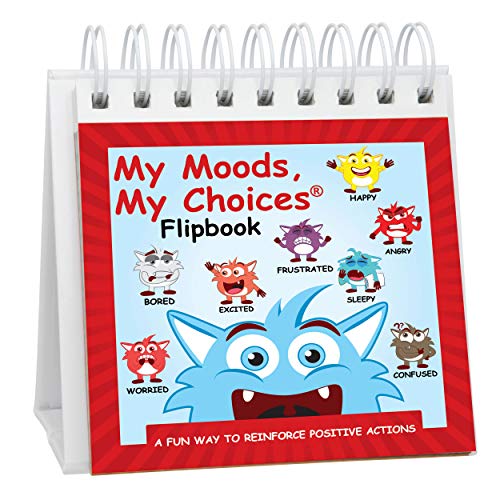
This laminated flipbook presents 20 moods with corresponding positive actions. It includes a built-in stand and comes in multiple sizes for different settings—home, car rides, classroom desks, and quiet corners. The durable pages enable repeated use while teaching children to identify their feelings and select constructive responses, supporting self-regulation and emotional literacy in a compact, kid-friendly format.
Hand2mind Feelings Family Secondary Emotions Book Set

The Secondary Emotions Book Set expands on core feelings with additional terms like Loved, Nervous, Frustrated, Excited, and Lonely. Each story centers on one emotion to deepen understanding and empathy. As with the core set, these titles encourage family activities and playful learning to translate feelings into practical actions. The bundle suits both classroom calm-down corners and home routines.
Maitys Feelings And Emotions Flip Book

This interactive flip book uses laminated tabs and kid-friendly illustrations to help children identify moods and practice positive responses. The compact size supports portability for car rides and calm-down corners, while the sturdy pages withstand frequent use. The tool emphasizes emotional expression and social skill development, making it a practical addition to therapy, classroom, or home settings.
GAKICO Feelings Flipbook for Kids

The GAKICO flipbook offers 22 moods with ten illustrated scenes to promote empathy and emotional regulation. It highlights positive actions aligned with each mood and includes coping strategies to practice when feelings run high. Designed for preschool through early elementary learners, the book supports discussions about expressing emotions and resolving conflicts in constructive ways.
Thought-Spot I Know What to Do Flipbook

This bilingual flipbook covers emotions in Spanish and English, pairing feeling words with practical coping strategies. Its dual-language format supports multilingual households and classrooms. Each page guides children to recognize emotions, name them, and select appropriate actions, aiding communication, self-regulation, and cross-cultural understanding.
Buying Guide: Key Considerations For Choosing Emotional Regulation Books For Kids
When selecting materials to support emotional detachment in a healthy, proactive way, consider the following factors:
- Age suitability: Look for age-appropriate language, illustrations, and activities that align with your child’s developmental stage and attention span.
- Emotional scope: Choose sets that cover core emotions (happy, sad, angry, scared, surprised) as well as secondary emotions (loved, nervous, frustrated, etc.) to build a broad emotional vocabulary.
- Format and durability: Laminated flipbooks, board books, and sturdy paperbacks withstand frequent handling in classrooms or home use; portability matters for travel and calm-down corners.
- Practical strategies: Books with explicit coping ideas, routines, and discussion prompts help translate emotions into actionable steps rather than simple recognition.
- Parental and caregiver guidance: Titles offering tips for adults enhance consistency and effectiveness in guiding children through emotional moments.
- Multilingual and accessibility options: Bilingual formats and clear visuals support diverse households and learners with different needs.
- Integration with activities: Look for companion activities, discussion prompts, or printable resources that extend learning beyond reading time.
Additional Perspectives And Comparisons
Evaluating these resources through different viewpoints clarifies which option best fits a given setting. For homes, a bundled set focusing on core emotions with accompanying activities can create a regular routine and predictable learning cycles. In classrooms, durability and classroom-ready formats (laminated pages, quick-glance prompts) help teachers incorporate emotional learning into daily instruction. For therapy or clinical use, tools with structured coping strategies and observable behavior cues support targeted interventions. Bilingual options maximize inclusivity in households with dual-language exposure, enhancing communication about feelings across languages.
Overall, these books and flipbooks share a common goal: to help children recognize what they feel, understand why they feel that way, and choose healthier responses. They provide tangible steps—through stories, visuals, and activities—that make emotional detachment less daunting and more manageable. When used together, they create a cohesive framework for ongoing emotional learning at home and in school settings.