Best Plastic Sleeve Binders for Art and Documents
The best choice depends on capacity, portability, and how you plan to display pages. This guide focuses on plastic-sleeve binders that protect artwork, photos, certificates, and documents while keeping pages visible and easy to flip. Ideal buyers include students, artists, teachers, and professionals who need neat, portable presentation books with clear sheet protectors. Below are five top picks that balance page count, durability, and accessibility.
| Product | Capacity | Special Feature | Best For |
|---|---|---|---|
| Sooez 30-Pocket Binder (8.5×11) | 60 pages | Customizable spine; high transparency; lies flat | Artists and students needing 60-page display with easy labeling |
| Sooez 72 Pocket Binder (8.5×11) | 144 pages | Elastic band closure; customizable spine | Large portfolios and secure travel storage |
| Sooez 30-Pocket Binder (8.5×11) 60 Pages | 60 pages | Targeted 30 pockets; lies flat | Compact, affordable option for single-project displays |
| STAGEEK 30-Pocket Portfolio Binder | 60 pages | Customizable cover and spine; easy access | Office and classroom use with quick content labeling |
| Sooez 40-Pocket Large Portfolio (9×12) | 80 pages | Large-format pages; high transparency | 9×12 art and photography portfolios needing more space |
Sooez 30-Pocket Binder with Plastic Sleeves
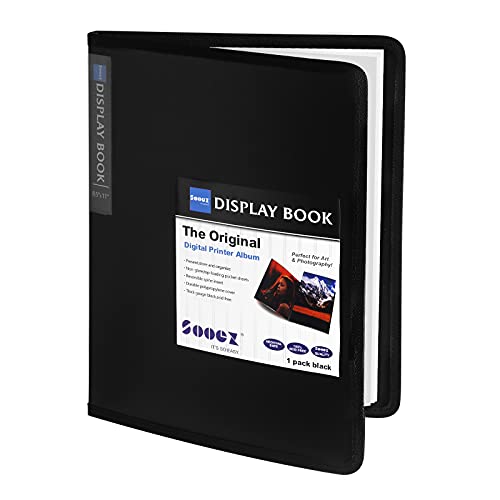
Capacity and layout: This binder displays 60 pages using 30 bound sheet protectors. The 11 1/2″ x 9 11/16″ folder size fits standard 8.5×11″ sheets with a slim profile. Best for artists who need a portable, single-project binder and want to present work cleanly without removing sheets.
Customization: A reversible spine insert allows labeling for watercolors, sketches, or certificates. This helps you organize multiple projects within the same binder and quickly locate categories.
Transparency and use: Crystal-clear PP sheet protectors ensure your artwork remains visible. The binding lies flat when opened, facilitating hands-free page viewing and handling. A suitable choice for class presentations or display portfolios that require rapid page-turns.
Caution: Non-refillable sleeves mean you cannot swap in new pages, so plan ahead if you expect ongoing additions.
Sooez 72 Pocket Binder With Plastic Sleeves

Capacity and coverage: This binder offers 72 bound top-loading sheet protectors, totaling 144 display pages. It’s a strong option for larger portfolios that must travel or be shared with others in meetings or classrooms.
Security: An elastic band closure secures the binder, reducing risk of pages shifting or falling out during transport. This makes it better for on-the-go use than models without a closure.
Customization and readability: Like the 30-pocket version, it includes a customizable spine, aiding quick identification of contents across multiple projects.
Caution: Non-refillable sleeves limit future expansion; consider alternatives if you expect steady page additions.
Sooez Binder With 18-Pocket Plastic Sleeves

This compact option displays 36 pages with 18 bound sleeves. Its lighter footprint makes it ideal for individual projects, certificates, or small showcases where space is a concern.
Spine labeling helps keep categories distinct within a smaller portfolio, and the binder’s flat-lay feature simplifies page viewing.
Limitation: Fewer pockets mean less capacity; suitable for light, short-term portfolios or small batches of work.
Sooez 30-Pocket Binder With 60 Pages

Display capacity: This 30-pocket binder shows 60 pages and uses a 12 2/5″ long spine dimension for a slightly larger footprint than standard. It suits projects requiring more page exposure per binder while preserving portability.
Labeling and transparency: The spine insert remains customizable for quick identification, and the clear sheet protectors ensure content visibility. The binder lies flat when opened to ease page turning.
Best for: Artists or photographers who want a straightforward, medium-capacity portfolio that travels well and keeps artwork and documents protected.
STAGEEK 30-Pocket Portfolio Binder

Versatility and access: This portfolio binder includes 30 top-loading pockets, holding 60 pages. It also features a front inner pocket for loose papers, business cards, and flyers, making it suitable for office, school, or home use.
Customization: The cover and spine are customizable with labels or stickers, enabling quick content identification and organization across multiple projects.
Best for: Environments where quick labeling and easy access to loose items inside the binder are beneficial. A good choice for presentations and classroom demonstrations.
Caution: As with other non-refillable sleeves, if you expect ongoing additions, you may want a larger capacity option.
60 Pockets Portfolio Binder With Plastic Sleeves

Capacity and material: This binder uses 60 pockets and 120 viewable pages in a sturdy PP binder, offering a mix of protection and visibility for larger or ongoing portfolios. The spiral design allows easy page turning and flexibility in display angle.
Best for: Users who need a robust, larger-capacity binder with easy page turning for frequent demonstrations or teaching sessions.
Limitation: Spiral binding may be less ideal for very rigid, formal presentations that require a fully flat display in some cases.
Buying Guide: Key Considerations When Choosing a Plastic-Sleeve Binder
Purpose and capacity: Determine how many pages you need to display now and in the near future. If you expect growth, choose a larger pocket count or a binder with an elastic closure to secure contents during transport.
Page protection and clarity: Look for high-transparency PP sleeves and whether the binder lies flat when opened. Clear sleeves help preserve image quality and reduce glare during viewing.
Labeling and organization: A customizable spine or cover helps separate projects by subject, client, or course. Consider whether you need space to annotate or insert a title or label.
Portability and durability: If you travel or attend meetings, an elastic closure or rugged cover can improve security. Consider weight, size, and how easily the binder fits in bags or briefcases.
Reuse and expansion: Some binders use refillable sleeves, while others are non-refillable. Decide whether ongoing page additions are likely and choose accordingly.
Price vs. value: Compare capacity, durability, and features across models. A slightly higher price may be justified by the added capacity, adjustable spine, and secure closure for professional use.
Frequently Asked Questions
- What size are most plastic-sleeve binders? Most common models use 8.5×11 inch sheets, which fit standard letter-sized paper.
- Are the sleeves refillable? Some binders use refillable sleeves; others come with non-refillable pockets. Verify before purchase based on future needs.
- Why choose a binder with an elastic closure? An elastic band protects contents from shifting during transport and keeps loose pages secure.
- Is a slim binder better for travel than a larger one? Yes, smaller binders are typically easier to carry, but ensure they still meet your capacity requirements.
- Can I label the spine and cover easily? Many models offer reversible spine inserts or customizable covers for quick labeling and organization.
- Do these binders lie flat when open? Several models are designed to lie flat to facilitate easy viewing and page turning.