Best AP Music Theory Tutor Resources for Self-Paced Learning
If you’re studying AP Music Theory or looking to strengthen your overall music theory, these tutors provide structured guidance on scales, chords, harmony, and ear training. They’re best for learners who want clear progression, practice materials, and self-paced study. The top picks below are suited for beginners through intermediate players, with varying emphasis on piano, guitar, or general theory.
| Product | Best For |
|---|---|
| Music Theory – Hal Leonard Guitar Method by Tom Kolb | Guitarists first learning theory concepts and ear training |
| eMedia Music Theory Tutor Complete | Home learners seeking interactive, structured lessons |
| Alfred’s Essentials of Music Theory: Complete | Comprehensive theory for all instruments, steady progression |
| Contemporary Music Theory – Level One by Mark Harrison | Pop and jazz musicians seeking practical harmony and notation |
| The Jazz Theory Book | Advanced jazz theory and improvisation fundamentals |
Music Theory – Hal Leonard Guitar Method

This guitar-focused theory guide combines step-by-step instruction with practical ear training. It covers scales, chords, modes, and how ideas connect to the fretboard. Best for guitar players who want a structured route into music theory alongside instrument-specific practice. Avoids broad keyboard-centric theory if your primary goal is non-guitar theory concepts.
Best for: Beginning to intermediate guitarists who want direct ties between theory and guitar technique. Why selected: This book-family approach helps translate theory into practical playing and listening skills. Caution: Primarily guitar-oriented; may require supplementary material for other instruments.
eMedia Music Theory Tutor Complete

This PC-based program delivers hundreds of interactive lessons, focusing on how rhythms, scales, chords, and progressions are created and used. It includes advanced concepts like augmented and seventh chords, circle of fifths, and minor scales. Best for self-led learners who prefer interactive, readable, and audible practice. Consider whether a PC download fits your workstation and whether you need cross-device access.
Best for: Home learners seeking a broad, interactive curriculum with immediate feedback. Why selected: Comprehensive coverage of theory foundations and progression. Caution: PC-only access may limit use on tablets or phones unless you use a compatible setup or alternate software.
Alfred’s Essentials of Music Theory: Complete

Alfred’s complete theory package combines a thorough textual guide with two CDs that provide listening and practice material. It’s well suited for learners who want a formal, textbook-style progression and a reliable reference for notation, scales, chords, and harmony. Best for students seeking a comprehensive theory backbone that supports multiple instruments. Limitation: the format is book-and-CD, which may be less interactive than digital options for some learners.
Best for: Versatile learners needing a robust, all-in-one theory resource. Why selected: Strong structure and examples across fundamentals. Caution: Physical medium might be less convenient for on-the-go study compared to digital apps.
Contemporary Music Theory – Level One
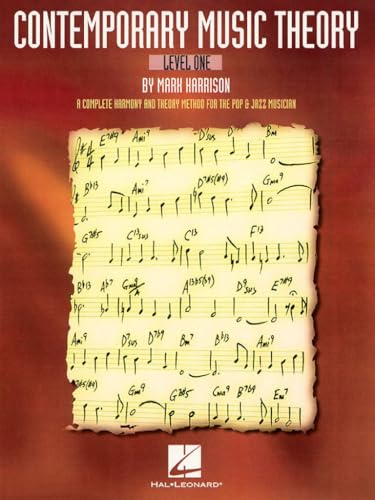
This level-one method targets piano players with a focus on harmony, notation, scales, and chords through a contemporary lens suitable for pop and jazz contexts. It provides practical concepts while building a foundation in staff notation and theory notations. Best for pianists who want to connect theory directly to modern musical applications. Limitation: pace may be slower for those seeking rapid mastery of advanced topics.
Best for: Piano players in pop and jazz scenes starting with notation basics. Why selected: Aligns traditional theory with popular music practice. Caution: May require additional material for complete coverage of advanced topics.
The Jazz Theory Book

Designed for serious jazz theory students, this reference delves into harmony, voice leading, scales, modes, and improvisational concepts. It’s best for readers who want an in-depth, authoritative resource on jazz theory and its practical applications. Choose this if you’re pursuing advanced study or improvisation. Caution: The material is dense and may be challenging for beginners without a foundational theory base.
Best for: Intermediate to advanced learners focusing on jazz theory and improvisation. Why selected: Authoritative coverage of jazz harmony and analysis. Caution: Not ideal for quick beginner-oriented learning.
Buying Guide: Key Considerations for AP Music Theory Tutors
What format suits your learning style? Do you prefer structured books, interactive software, or a mix of listening and notation practice?
- Digital interactive programs offer immediate feedback and pacing. Books and CDs provide durable references but may lack interactive exercises.
- Guitar-centered theory helps string players; piano-focused materials suit keyboard learners; jazz-specific books support improvisation and harmony in that genre.
- Begin with Level One or foundational resources before moving to advanced topics like jazz theory or complex harmony.
- If you study on a laptop or tablet, consider software-only options or cross-platform access; PC-only tools limit mobility.
- Look for materials with ear training, sight-singing, and rhythm practice to reinforce concepts.
How to choose between a book-and-CD vs. interactive software? If you learn best by listening and following exercises step by step, a book-and-CD can be effective. If you prefer guided, hands-on practice with instant feedback, interactive software is usually the better option. For exam prep like AP Music Theory, combining multiple formats often yields the strongest outcomes.
Frequently Asked Questions
- What is the best starter resource for AP Music Theory? A program or book that covers scales, chords, intervals, and basic harmony with exercises and explanations suitable for beginners.
- Should I focus on piano-based theory or guitar-based theory first? Start with the instrument you play; theory principles are transferable, but initial practice should align with your primary instrument to maximize relevance.
- Are there risks in using only one tutor? Yes, relying on a single source can limit exposure to different approaches. Consider mixing formats (books, software, and practice sheets).
- Is jazz theory essential for AP-level skills? Jazz theory concepts enrich harmonic understanding and analysis, beneficial for higher AP sections and improvisation-style tasks.
- Do these resources include ear training? Several options offer ear training or sight-singing components, essential for AP Theory and practical musicianship.
- Can these resources be used by multiple instruments? Some are instrument-specific; others provide broader theory coverage that applies across instruments. Check the focus before buying.