Best 5 Senses Children’s Books for Early Learners
Introducing young readers to the five senses builds a strong literacy foundation while sparking curiosity. The following handpicked picks cover sight, hearing, touch, smell, and taste with engaging text, vivid illustrations, and interactive activities. This list emphasizes bilingual options, sticker-based learning, and developmentally appropriate puzzles to support early reading and descriptive language skills.
Summary of chosen products:
- Little Pebble Our Amazing Senses, 5 Book Set — Capstone Press
- Kaplan Early Learning My Five Senses Bilingual Board Books — Kaplan Early Learning Company
- Five Fun Senses Make A Sticker — Fun Express
- Our 5 Senses Game — Learning Advantage
- Highlights My First Puzzle Fun 2025 — Highlights for Children
Little Pebble Our Amazing Senses, 5 Book Set

The Capstone Press set introduces the five senses through five compact readers: Our Ears Can Hear, Our Eyes Can See, Our Mouths Can Taste, Our Noses Can Smell, and Our Skin Can Touch. Each book focuses on a single sense, using clear language and approachable examples to help emerging readers connect vocabulary with daily experiences. The format supports guided reading and independent exploration, making it a versatile classroom or home-library addition for early learners.
Key features include kid-friendly explanations of how senses work, simple diagrams or illustrations, and repetition that reinforces recognition of sight, sound, smell, taste, and touch. The five-book collection is especially suitable for small group instruction or a bilingual classroom library that centers sensory literacy as a gateway to broader science topics.
Kaplan Early Learning My Five Senses Bilingual Board Books – Set of 5

These bilingual board books make sense approachable for both English and non-English speakers. Each compact title highlights a specific sense with simple words and bright illustrations that support vocabulary building and early comprehension. The board book format is durable for little hands, and the bilingual presentation fosters family engagement by encouraging parents and caregivers to compare words across languages while reading aloud.
Features emphasize accessibility and cognitive development: concise, repetitive phrasing helps children anticipate common sense-related phrases; visual cues reinforce understanding; and the five-book set provides a cohesive kit for a classroom sensory unit or home learning path. This option is well-suited for dual-language households and early literacy centers seeking inclusive content.
Five Fun Senses Make A Sticker – 12 Pieces – Educational and Learning Activities for Kids
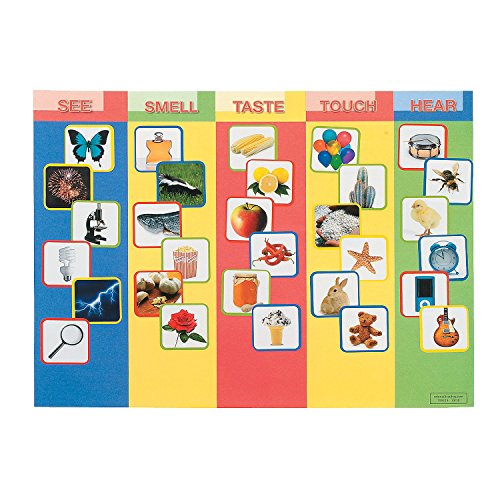
Five Fun Senses Sticker Scenes offers an interactive way to explore the senses through a hands-on activity. The 12-piece sticker set provides opportunities for children to match scenes with sensory cues, building descriptive language as they describe what they see, hear, smell, or touch in each scene. This playful approach can complement reading time or be used as a standalone activity to reinforce sensory vocabulary in a tactile manner.
Designed for interactive learning, these stickers encourage fine motor skills, naming of senses, and observational talk. The activity is ideal for small group work, sensory center stations, or at-home practice where kids can explore cause-and-effect relationships between sensory experiences and language.
LEARNING ADVANTAGE Our 5 Senses Game | Learning Game for Kids Ages 3+
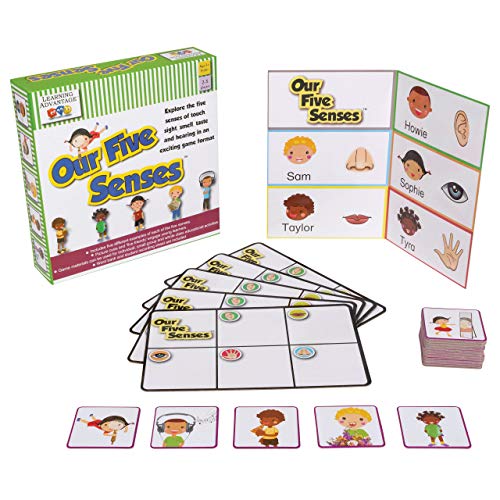
This educational game presents five distinct sense categories through picture cues and “five friends” characters to engage young learners. The gameplay is adaptable to different developmental levels, enabling guided instruction or independent play. The design supports verbal description practice, helping children articulate observations about sight, hearing, touch, smell, and taste.
The activity encourages flexible thinking and descriptive language as players compare cues, describe sensations, and practice accurate word usage. With its multiple play formats, it works well in classroom centers, small-group sessions, or family game night, serving as a practical tool for reinforcing vocabulary related to the senses.
Highlights for Children My First Puzzle Fun 2025 Puzzle Books

This four-book puzzle set from Highlights for Children blends travel-friendly activities with a focus on critical thinking and pattern recognition. Puzzles include matching, mazes, spot-the-differences, and other age-appropriate challenges that require kids to observe, compare, and describe details—skills closely tied to sense-based learning. The books are designed to be screen-free, promoting concentration and problem-solving through hands-on tasks.
Beyond the basic sense exploration, these puzzles help children practice persistence, attention to detail, and visual discrimination. The set’s varied activities keep learners engaged while reinforcing vocabulary for senses and descriptive language used during problem-solving.
Buying Guide: Key Purchase Considerations and Comparisons
Purpose and age range: Choose materials aligned with your child’s developmental level and reading ability. Sets with simple phrases and sturdy formats suit ages 3-6, while bilingual or board-book formats support early language learners and multilingual households.
Format and durability: Board books and sturdy puzzles are ideal for toddlers and preschoolers who still explore with hands and mouth. Paperback five-book sets are great for guided reading and classroom use, though they may require additional care with younger children.
Engagement and interactivity: Interactive elements like stickers, games, and puzzle activities foster active participation and descriptive language practice. Consider a mix of reading, hands-on activities, and play-based learning for a well-rounded sensory unit.
Language accessibility: Bilingual options or books with simple, repetitive language help families use everyday conversations to reinforce vocabulary. Consider pairing English titles with translations or bilingual content for inclusive learning experiences.
Learning focus: Some products emphasize explicit sense teaching (eye, ear, nose, tongue, skin), while others integrate broader early literacy goals like phonemic awareness, memory, and narrative skills. A combination from the list covers both senses and foundational reading development.
Durability and reuse: For classrooms, durability matters. Look for flat-lay activities and reusable formats that can accommodate small groups, rotation stations, and repeated usage across several weeks of lesson plans.
Implementation context: Use the books and activities as part of a thematic unit on the senses, followed by descriptive language practice, labeling exercises, and brief science connections about how senses help us understand the world. This approach supports cross-curricular learning and storytelling.